

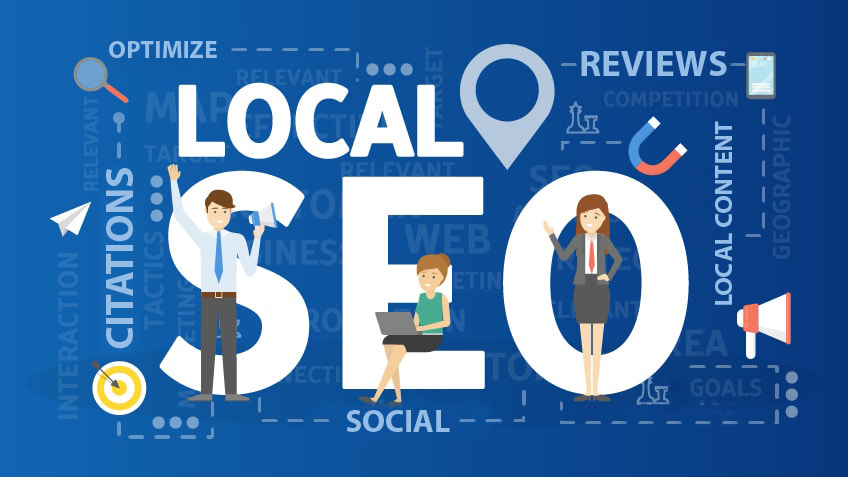
 Competing with a large brand across thousands of broad search queries can be unrealistic for a small company. Local search changes the competitive environment by adding geographic and service relevance to the equation. A small business can focus its local search marketing on the communities it actually serves and the services that generate meaningful customer inquiries.
Small businesses need a focused local search strategy
A practical local search strategy begins by identifying the intersection between customer demand, actual services and geography. Instead of targeting every broad industry phrase, a business can prioritize queries that indicate a realistic need for a service within its market.
A dentist may need visibility around specific treatments, while an HVAC contractor may prioritize air conditioning repair, furnace repair, installation and maintenance. This is where service keyword research helps connect real customer demand with the services a company wants to grow.
Use local keyword research to prioritize opportunities
Keyword research becomes useful when it influences decisions. A business should understand which searches correspond to informational research, immediate service needs, comparison behavior and location-specific intent.
Businesses can evaluate local search opportunities using factors such as:
- whether the keyword represents a service the company actually provides;
- the likelihood that the query represents a potential customer;
- relevance to locations the business genuinely serves;
- which businesses and pages currently appear for the query;
- existing website coverage and content quality;
- the potential value of a qualified lead for that service.
This prevents a small company from spreading its resources across hundreds of low-priority terms. The objective is to identify where local search optimization can support meaningful customer acquisition.
What local competitor analysis should actually reveal
A local competitor analysis should answer practical questions. Which businesses repeatedly appear for important searches? How clearly do their websites explain services? How complete are their Google Business Profiles? What types of pages, reviews and local information help customers compare them?
During a local SEO audit, it can be helpful to review:
- how competing businesses describe their core services;
- which commercially important topics competitors cover on their websites;
- review quantity, recency and recurring customer themes;
- where established competitors maintain their business information;
- website content quality and internal linking;
- calls to action and conversion paths.
The purpose is to identify what customers in the market are already being shown and where useful information may be missing. A small business can then build a more complete experience around its own strengths rather than producing a copy of the leading competitor.
Google Business Profile can reduce the size disadvantage
A national company may have a much larger website, but a local customer still needs relevant information about a provider in a particular area. Google Business Profile optimization helps a small company accurately present its services, location or service area, hours, reviews, photographs and contact options.
Important areas to maintain include:
- accurate primary and secondary categories;
- current services and business information;
- hours customers can rely on;
- correct contact and website information;
- authentic photos representing the business;
- legitimate customer reviews and professional responses.
Small businesses can win with deeper service content
One practical advantage of a local company is direct knowledge of customer questions. Technicians, reception staff, sales teams and business owners hear recurring concerns every day. Those questions can inform local content optimization.
Strong local service content may address:
- the problem or need behind the service;
- common warning signs or customer concerns;
- what a customer can reasonably expect;
- factors that may affect scope, timing or Google Business Profile optimization cost;
- where the company actually provides the service;
- frequently asked questions based on real customer conversations;
- a clear next step for contacting the business.
This type of content supports SEO for local businesses while helping potential customers make informed decisions.
Reviews can become a competitive advantage for smaller companies
Online reputation management gives local businesses an opportunity to demonstrate how real customers experience the company. This can be particularly important when competing against a better-known brand.
A sustainable process is more useful than occasional campaigns for large bursts of reviews. Businesses can request honest feedback at appropriate points after genuine customer interactions, make the process simple and monitor new feedback consistently.
Customer feedback has value beyond search visibility. Recurring positive and negative themes can help a company understand which parts of its service experience are working well and where operational changes may be useful.
Citation management for small businesses
NAP consistency is primarily an information-quality task. Important directories, industry platforms and legitimate local resources should contain current details about the business.
This is particularly important when a business has changed its address, telephone number, name or service model. Old records can remain online for years. A citation audit can locate conflicting information and help prioritize corrections.
A realistic small-business local SEO scenario
Consider a hypothetical independent plumbing company serving three communities in a U.S. metropolitan area. Several larger competitors dominate broad organic searches. The smaller company has good customer feedback and experienced technicians, but its website consists of a homepage and a few short service pages. Its Google Business Profile is active but incomplete.
A practical plan might proceed as follows:
- Audit existing local rankings, GBP information, website pages, reviews and citations.
- Connect business priorities with local keyword research.
- Complete accurate Google Business Profile optimization.
- Create or substantially improve pages for priority services rather than publishing dozens of thin location pages.
- Add useful geographic information where it genuinely helps customers understand service coverage.
- Correct important citation inconsistencies.
- Develop sustainable review management.
- Track qualified calls, forms and leads alongside local search visibility.
This scenario does not assume that the smaller company will suddenly outrank every large competitor. Instead, it narrows the competitive field. The company concentrates resources on searches where service relevance, geographic relevance, customer reputation and useful content can realistically matter.
Adapting local SEO to different U.S. businesses
The framework can be adapted to many industries, but priorities change according to customer behavior. Electrician SEO should reflect how people research and select providers in each category.
Different industries may emphasize different elements:
- a plumber may prioritize emergency and high-intent service searches;
- HVAC SEO may require seasonal service planning;
- dental SEO may connect treatment information with local practice visibility;
- restaurant SEO may emphasize discovery and immediate customer decisions;
- law firm SEO may require deeper educational content around legal services.
Measure leads, not rankings alone
Rankings can indicate whether search visibility is improving, but a small business ultimately needs customers. Local rank tracking should therefore be combined with conversion data whenever possible.
Useful metrics may include:
- rankings for commercially relevant local queries;
- traffic reaching pages connected with real business services;
- qualified phone calls;
- website actions with potential business value;
- customer activity associated with the business profile;
- which pages actually produce meaningful actions;
- lead quality by service and location.
A focused local strategy can be more efficient than a broad one
Small businesses do not need to imitate every marketing activity of larger competitors. They need to understand where they have genuine relevance and execute those areas well. local keyword research can work together around that objective.
A sustainable approach starts with accurate business information, strong service content and a useful Google Business Profile. It continues with consistent citations, genuine customer reviews, competitor research and measurement of qualified leads. Over time, these elements give a small business a structured way to improve its Google Maps visibility without requiring it to become the largest company in the market.